Service
distinguishes TGM from other component heater manufacturers
Our focus is building a turnkey Sublimation Prevention
System that is measured, designed, and field installed
by our engineering team.
Pyewch®
SPS patented technology sets a new benchmark for thermal safety,
efficiency, and reliability.
Pyewch
Concept
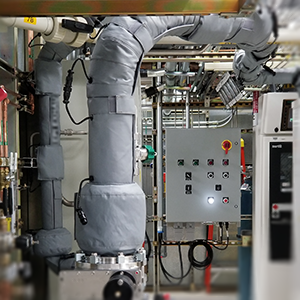
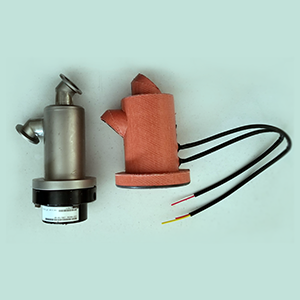
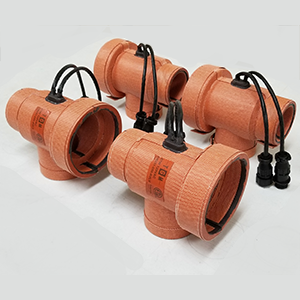
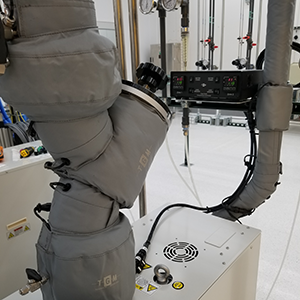
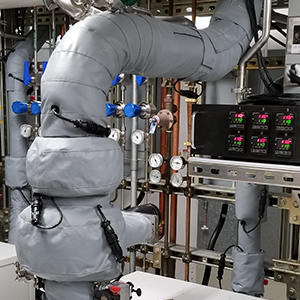
Pyewch® is a system of custom heated removable insulation
jackets designed to meet your specific needs for controlled
heat. Measured-Engineered-Installed, The Pyewch® system
is a comprehensive turnkey solution
- Pyewch®
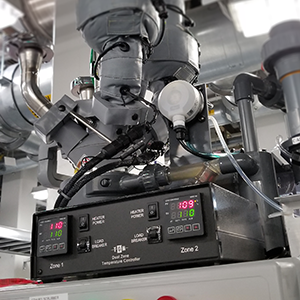
is unique, in that it senses and controls the pipe temperature
- Our
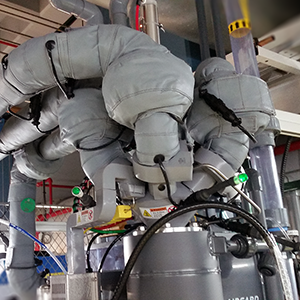
covers have a well-insulated core that is 'Cool to the Touch’
- We use
an ultra-clean silicone jacket that is durable
and waterproof.
- The low
profile jumpers are constructed using military type connectors
that are extremely rugged, and
moisture resistant when mated.
- Power
indicator lights will immediately identify a problem.
- Pyewch®
efficient design operates on ultra-low power consumption.
Safety
is an important part of the Pyewch® system
Your safety is important to us. That is why we have included
as many safety features as possible and will continue to shape
our product design around safety
- Each
heater jacket has built in over-temp protection to prevent
any run away condition.
- Each
heater jacket has an integral ground plane over the heating
element just in case a cover is accidentally cut or punctured.
- GFCI
(Ground Fault Circuit Interrupters) with 5mA trip are standard
and built into our multi-zone control cabinets and cord set
model is used with single zone units.
- Pyewch®
exterior surface temperatures are well below personnel protection
standards and exceed the SEMI S2-93, ASTM C1055,
and the US Navy MILSPEC-769 guidelines.
Gas
Supply Lines
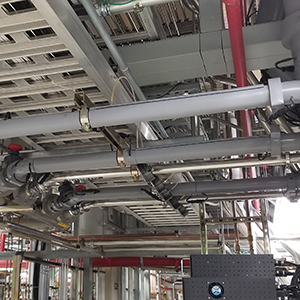
Certain gases used to convey dopants that are deposited on the
wafer surface require heat. Constant moisture free gas flow
is important. Included in this category are SiH2Cl2, BCL3, C5F8,
and WF6. These gas delivery lines are heated using electric
heat trace and insulation.
We have
found that controlling the temperature in incremental zones
from the gas source to the mass flow valve in the tool produces
the best results.